· Electricity news
Warm Homes Loans in Devon: Costs, Savings and Eligibility
Quick answer
Devon households can apply for government-backed Warm Homes Loans to spread the cost of solar panels, batteries and heat pumps, subject to lender checks. According to DESNZ, some loans are interest-free, while others offer reduced interest. Compare repayments with realistic bill savings before deciding whether an upgrade makes financial sense.
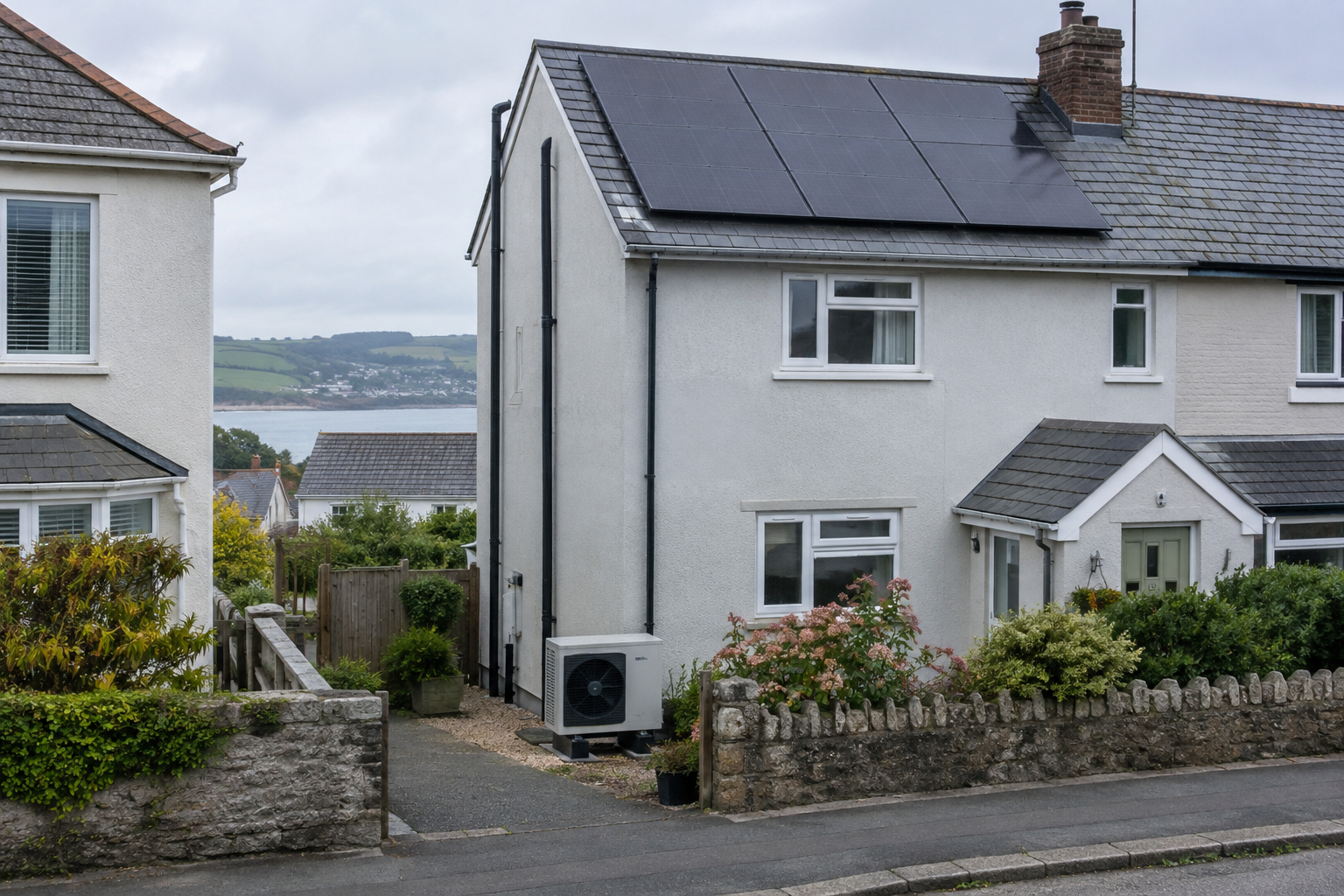
What is the Warm Homes Loan Scheme and can I apply in Devon?
The Warm Homes Loan Scheme offers government-backed no- and low-interest borrowing for home energy upgrades, and Devon households fall within its UK-wide coverage. That doesn’t mean automatic approval: lenders will carry out affordability, credit and eligibility checks.
The Department for Energy Security and Net Zero (DESNZ) announced the scheme in its GOV.UK Warm Homes Loan Scheme factsheet, published on 27 October 2026. It describes a way to install clean energy technology without paying the installation cost upfront, spreading repayments over many years instead.
For households in Exeter, Plymouth and Torbay, that could make an upgrade worth investigating if finding the money all at once has been the sticking point. The same applies in rural Devon, including off-gas homes around Tavistock or on the edges of Exmoor.
But there’s an important distinction: no upfront payment doesn’t mean a free installation. This is borrowing, not a grant, and the loan must be repaid.
With a no-interest loan, you repay the amount borrowed without interest being added. A low-interest loan still charges interest, so borrowing adds to the cost. DESNZ advises checking the total amount repayable, how long repayments will last and any monthly fees—not just whether the monthly payment looks manageable.
The technologies highlighted by DESNZ include:
- Solar panels, which generate electricity from daylight.
- Batteries, which store electricity for use later.
- Heat pumps, which use electricity to move heat into your home.
Those aren’t a compulsory shopping list. An Exeter terrace, a coastal home in Torbay and a granite cottage near Dartmoor won’t necessarily suit the same equipment. The sensible starting point is what works for your property and energy use, rather than assuming you need all three.
Who needs to check the small print?
UK-wide coverage means Devon is included geographically. It does not mean every participating lender will accept every Devon applicant or offer the same products.
That distinction matters with providers serving particular communities. In the factsheet, South Manchester Credit Union describes its offer as being for residents of Central and South Manchester. Its participation shouldn’t be read as a promise of loans for someone in Barnstaple.
The DESNZ factsheet also doesn’t settle detailed eligibility for tenants, landlords, holiday lets or second homes. If you rent in Plymouth, let out a property in Exmouth or own a holiday cottage near Totnes, don’t assume the general wording confirms your eligibility.
Ask participating providers whether they cover your postcode, your ownership or tenancy arrangement and the property’s use before making plans around the finance. Those questions need a clear answer from the provider, alongside its normal lending checks.
Which home energy upgrades can I borrow money for?
You can borrow towards solar panels, home batteries and several types of low-carbon heating, according to the Department for Energy Security and Net Zero’s (DESNZ) Warm Homes Loan Scheme factsheet. Each technology has its own maximum supported loan, with a condition attached to air-air heat pumps.
Here’s the full list published by DESNZ:
| Technology | Maximum supported loan |
|---|---|
| Solar panels | £15,000 |
| Electrical storage battery | £15,000 |
| Air-water source heat pump | £20,000 |
| Air-air source heat pump | £10,000, when MCS certification is available |
| Ground source heat pump | £35,000 |
| Biomass boiler | £20,000 |
| Heat network connection | £7,500 |
| Micro-renewable system | £20,000 |
These are borrowing caps, not installation prices, grants or guaranteed offers. DESNZ says lenders will carry out normal affordability, credit and eligibility checks. The figure beside a technology isn’t a promise that you’ll be offered that amount—or that your installation will cost it.
The factsheet also doesn’t explain an overall combined borrowing cap. So don’t add the figures together and treat the total as your household’s entitlement, even if you’re considering solar, a battery and new heating together.
What might suit a Devon home?
Solar panels generate electricity from daylight, while a home battery stores electricity for later use. They can work together, but they do different jobs. For a roof in Exeter or Exmouth, shading, orientation and condition are practical things to assess before choosing a system.
Heat pumps move heat rather than creating it by burning fuel. An air-water system takes heat from outside air and supplies a water-based heating system, such as radiators or underfloor heating. An air-air system delivers warmth through indoor air units; DESNZ lists its loan support as conditional on MCS certification being available.
Ground source heat pumps draw heat from the ground through buried pipework. Biomass boilers burn fuel such as wood pellets, while a heat network supplies heat from a shared source rather than an individual boiler in each home. A connection therefore depends on a suitable network being available locally.
DESNZ also lists “micro-renewable system”, but the factsheet doesn’t define which equipment that category covers. That’s something to clarify before relying on it for a particular project.
For an off-gas home near Tavistock or on Exmoor, the starting point should be a property assessment—not an automatic recommendation for one heating system. Insulation, heat loss, existing radiators, outdoor space and fuel storage all matter. A cob or granite cottage needs its own assessment, rather than assumptions based on what worked in a neighbour’s newer house.
How much interest will I pay and which lenders offer loans?
There isn’t one guaranteed rate: the Department for Energy Security and Net Zero (DESNZ) describes an “up-to-5 per cent reduction in interest rates” compared with regular bank or high-street lender loans. Its factsheet says some products are interest-free, and some allow repayment over up to thirty years.
That wording needs care. It doesn’t establish a universal five-percentage-point discount, so don’t assume an ordinary lender’s rate simply has five points knocked off. Your actual rate, repayments and borrowing term will need checking with the provider.
What the figures mean for your budget
DESNZ gives an illustrative example of someone borrowing £10,000 at 8% over seven years, with repayments of around £155 a month, on a loan available at the time of the factsheet. It says the scheme could reduce repayments by up to £285 a year.
That’s a government finance illustration, not an electrician’s quote, a personalised calculation or an offer every Devon reader can obtain. The repayment saving is also separate from any saving on energy bills.
According to DESNZ, the ten initial providers are:
- Homeserve, partnering with E.On
- Hometree Finance
- Propensio
- Secure Trust Bank
- Selina Finance
- South Manchester Credit Union
- Sunsave
- Tandem Bank
- The Money Co-op
- This Bank
Being on that list doesn’t mean every provider will lend to every household. South Manchester Credit Union’s quoted offer in the factsheet concerns residents of Central and South Manchester. If you’re in Exeter, Plymouth or Torquay, check geographical and membership restrictions before spending time on an application.
When comparing offers, ask each lender for the total amount repayable, the interest rate and total interest cost, any monthly fees, and the full repayment term. A smaller monthly payment can look reassuring, but a longer interest-bearing loan can cost more overall. Interest-free borrowing still means repaying the money borrowed, so check any fees too.
Compare installer arrangements as well. DESNZ says some lenders work only with specific installers, while others let you choose any MCS-certified installer. For an off-gas home near Tavistock or a rural property outside Barnstaple, ask whether the lender’s approved installers cover your address. A finance package is only useful if the installation arrangements work for your home.
The factsheet doesn’t provide complete product terms or establish whether individual loans are secured. Don’t assume either way. Ask explicitly whether borrowing is secured against your home, what happens if you miss payments, and whether early repayment brings charges. Get those answers in writing alongside the repayment schedule, rather than relying on the headline monthly figure.
Will a Warm Homes Loan actually lower my bills in Devon?
The upgrades could lower your energy bills, but that doesn’t automatically mean you’ll have more money left each month. Whether you’re better off while repaying a loan depends on your home’s actual savings, finance payments and ongoing costs.
The Department for Energy Security and Net Zero (DESNZ) says installing a heat pump, battery and solar panels could save families up to £550 a year on energy bills, with a further £300 possible through a time-of-use tariff.
That’s a potential saving for the combined technologies, not a promise for every installation. Crucially, it’s an energy-bill estimate — not guaranteed extra disposable income after loan repayments. The factsheet supplies no Devon-specific performance figures.
Check the savings against the repayments
A time-of-use tariff charges different electricity prices at different times. Moving suitable electricity use into cheaper periods, or charging a battery then and using its stored electricity during dearer periods, can reduce costs.
But the tariff needs to suit your household. If much of your electricity use falls in expensive periods and you can’t shift it or cover it with stored energy, the deal may be less attractive. Ask for a projection based on how you actually live, rather than assuming you’ll reorganise everything around the cheapest hours.
There’s also a separate finance figure to keep straight. DESNZ’s example says someone borrowing £10,000 at 8% over seven years could repay around £155 a month on an existing loan, and could save up to £285 annually on repayments through the scheme.
That £285 is a potential reduction in borrowing costs compared with the example’s regular loan. It isn’t an energy saving, and it doesn’t mean the scheme’s repayments disappear.
For a useful household comparison, ask for:
- Projected annual energy savings, using your current consumption and clearly stated tariff assumptions.
- Annual finance payments, including any fees.
- Ongoing costs, such as servicing or any system-care package, with clarity about what’s already included.
Subtract the payments and additional ongoing costs from the projected energy savings to see the possible effect on your annual budget.
A Plymouth terrace and an off-gas Dartmoor cottage need different assessments. For the terrace, roof shading and when the household uses electricity could strongly influence the value of solar and storage.
For the cottage, the existing heating fuel, heat loss and proposed heating design need careful attention, particularly in an older granite or cob building. Neither address alone tells you what you’ll save.
Ask the installer to explain how roof shading, household consumption, heating design and tariff suitability feed into your projection — and to show what happens if savings fall below expectations.
Can I combine a loan with a heat pump grant in Devon?
Yes — according to the Department for Energy Security and Net Zero (DESNZ), homeowners can combine a Warm Homes Loan with a Boiler Upgrade Scheme grant of up to £9,000 towards a heat pump, subject to the relevant grant conditions. That maximum isn’t an automatic entitlement for every installation.
The DESNZ factsheet doesn’t set out which installations qualify for each grant amount. Before you work out how much to borrow, check the current Boiler Upgrade Scheme conditions and ask your installer to confirm what your proposed installation could receive. Don’t build your budget around the headline maximum until that’s clear.
Ask for a written breakdown showing the full installation cost, the grant being allowed for and the balance you’d need to cover. It’s worth checking whether any proposed radiator changes or other associated work are included, rather than discovering a separate bill later.
You’ll also see Home Energy Scotland mentioned in the factsheet. As the name suggests, that’s the Scottish route, not the one for a home in Exeter, Plymouth or elsewhere in Devon.
DESNZ recommends using the free advice available on GOV.UK to consider suitable upgrades and check whether you could qualify for other grants, particularly if you’re on a lower income. Do that before committing to borrowing. The factsheet doesn’t identify a separate Devon funding pot, so don’t assume there’s an extra local payment available or that different grants can automatically be combined.
Check the house as well as the funding
Getting the finance lined up is only part of the job. Whether you’re replacing heating in an off-gas rural home or upgrading a town terrace, ask the installer to assess the property rather than offer a system based on a quick glance.
Useful questions include:
- Insulation and heat loss: will they carry out a room-by-room heat-loss assessment, and what insulation improvements should you consider?
- Radiators: can the existing radiators deliver the heat needed with the proposed system, or would some need changing?
- Space: where would outdoor equipment, any hot-water cylinder and associated pipework go?
- Roof condition: if solar panels are part of the same project, does the roof need attention first?
For cob and granite cottages around Totnes or Tavistock, age alone shouldn’t be treated as a reason to rule out a heat pump. Ask for advice that accounts for the building’s construction, condition and insulation needs.
Around Torquay or Exmouth, raise exposure, equipment siting and coastal salt air with the installer, including any maintenance implications.
Check any relevant planning or listed-building requirements with the appropriate council before agreeing to work, too. Don’t rely on a blanket assurance that permission is always — or never — needed.
How do I apply and check that the installation is safe?
Apply through a participating lender or installer after comparing quotes and finance terms. The Department for Energy Security and Net Zero (DESNZ) requires MCS-certified installers for all covered installations except heat network connections.
DESNZ’s factsheet sets out the steps below. For Devon households, the starting point is choosing something that suits the building—not simply finding a manageable monthly payment.
-
Consider suitable upgrades. Use the free advice available on GOV.UK before committing. Ask prospective installers to explain why their proposal suits your home, whether that’s a terrace in Exeter, an off-gas cottage near Tavistock or a coastal property in Torbay. A recommendation should account for your particular building and how you use it.
-
Check grants before deciding how much to borrow. DESNZ recommends checking eligibility, particularly if you’re on a lower income. Establish what support you can receive before agreeing the size of the loan.
-
Compare the installation and the borrowing. Get installation quotes and check what each includes. Alongside the monthly payment, compare the total amount repayable, repayment period and any monthly fees. Ask for anything unclear to be explained in writing—you don’t need to make the decision on the doorstep.
-
Confirm who you can use. According to DESNZ, some lenders work only with particular installers; others let you choose any MCS-certified installer. Check this before spending time arranging quotes. Don’t assume your usual local electrician holds MCS certification, or that certification guarantees a particular saving.
-
Apply and complete the checks. Submit your application through a participating lender or installer. DESNZ says the lender will carry out normal affordability, credit and eligibility checks. The factsheet doesn’t give a single application timetable, so ask your chosen provider what happens next.
-
Keep the paperwork together. Retain the quote, finance agreement, invoice, proof of purchase and, where applicable, MCS certificate. Keeping digital copies as well makes it easier to find the details later.
Before work starts, ask who will handle any associated electrical work, what checks and documentation they’ll provide, and whether any electricity network approvals are needed. Ask who is responsible for arranging those approvals, too. The DESNZ factsheet doesn’t identify a specific South West grid restriction, so requirements need checking for your proposed installation.
The heat network exception is an exception to the scheme’s MCS requirement. It does not mean heat network work is unregulated or unsafe; ask the provider which standards and safeguards apply.
After installation, DESNZ recommends reviewing whether a suitable smart energy tariff could improve savings. Compare it against how your household actually uses electricity, rather than switching on the promise of a cheaper overnight rate alone.
What else should Devon households know before taking out a loan?
A smaller energy bill is welcome, but the borrowing still needs to fit your household budget. Before signing, check the full repayment cost and what happens if your circumstances change — not just the headline monthly payment.
Does a government-backed loan mean I’m guaranteed approval?
No. The Department for Energy Security and Net Zero (DESNZ) says lenders will carry out normal affordability, credit and eligibility checks. UK-wide availability doesn’t mean every lender will accept every Devon applicant: check individual lending criteria before spending money on preparations.
Can I use my own local installer?
That depends on the finance provider. According to DESNZ, some lenders work only with particular installers; others allow you to choose any MCS-certified installer. If you already have someone in mind in Exeter or Barnstaple, establish whether the lender accepts them before committing.
What if I move home or want to repay early?
The factsheet doesn’t explain early-repayment conditions or what happens when you sell your property. Ask the lender for written answers, including whether the borrowing is secured against your home, whether charges apply and what happens to any outstanding balance. Don’t assume the agreement transfers to a buyer.
Are holiday lets and rented homes covered?
The DESNZ factsheet doesn’t set out specific rules for holiday lets, landlords or tenants. That matters around Torbay and Devon’s coastal villages. Describe the property’s actual use to the lender and ask for confirmation of eligibility before arranging work or paying a deposit.
Should I wait for more offers?
DESNZ expects further lenders and products as the scheme develops. That isn’t confirmation of any unnamed offer, rate or launch date. Compare what’s actually available, rather than budgeting around a possible future deal. Revisit the GOV.UK Warm Homes Loan Scheme factsheet and contact lenders directly for current terms.
What paperwork should I keep?
DESNZ advises keeping the quote, finance agreement, invoice, proof of purchase and MCS certificate. Keep written savings estimates and their assumptions too, so you can compare the promised performance with how the system works in your home.
For households in Barnstaple, Newton Abbot and across Devon, work through this checklist before signing:
- Get a property-specific assessment. A granite Dartmoor cottage or rural off-gas home needs advice based on its condition and heating needs.
- Check grant eligibility before deciding how much to borrow.
- Compare written quotes, with the same equipment, installation scope and any electrical work clearly itemised.
- Verify installer credentials, including the relevant MCS certification.
- Read the full finance agreement, checking total repayments, fees, term, security and early-exit conditions. Ask a local electrician whether an electrical installation condition report (EICR) would help establish what preparation your home needs.
Source: Warm Homes Loan Scheme: Factsheet (GOV.UK (DESNZ)). Our write-up explains what it means for Devon; check the original for full details.
Your questions answered
Are Warm Homes Loans available across Devon?
Yes. DESNZ says the scheme covers households across the whole UK, which includes Devon, Plymouth and Torbay. That doesn't mean every applicant will qualify or every lender will serve every postcode. Participating lenders carry out affordability, credit and eligibility checks. Check individual providers' geographical or membership restrictions before assuming a particular offer is available to you.
Is every Warm Homes Loan interest-free?
No. The DESNZ factsheet describes a mix of no-interest and low-interest loans, with some lenders offering interest-free products. Your actual terms depend on the provider and product. Some repayment periods extend to thirty years, but that isn't a standard offer for everyone. Compare the total amount repayable, monthly fees and repayment period, rather than choosing purely on the monthly payment.
Can I use a Warm Homes Loan alongside a heat pump grant?
According to DESNZ, homeowners can combine a loan with a Boiler Upgrade Scheme grant of up to £9,000 to reduce the cost of installing a heat pump. That's the scheme to check for a Devon property, rather than Home Energy Scotland. The maximum grant isn't guaranteed for every installation, so confirm eligibility and how the grant affects the amount you need to borrow.
How much could I save on energy bills?
DESNZ says a heat pump, battery and solar panels could together save families up to £550 a year on energy bills, with a further £300 possible through a time-of-use tariff. These aren't guaranteed savings for a Devon home, or figures showing what's left after finance payments. Ask for a property-specific estimate and compare it with your repayments and ongoing costs.
Can I choose my own installer?
Sometimes. DESNZ says some lenders work only with particular installers, while others let you choose any MCS-certified installer. Check that before committing to a quote. The factsheet says all installations covered by the scheme, except heat network connections, will be carried out by MCS-certified installers. Keep the relevant certificate and your installation and finance paperwork once the work is complete.
Can landlords or holiday-let owners in Devon apply?
The DESNZ factsheet doesn't give detailed eligibility rules for landlords, holiday lets, second homes or tenants. Its UK-wide coverage statement isn't enough to confirm that a particular property or applicant qualifies. If you're considering work on a Torbay holiday let or a rented Devon home, ask a participating lender about ownership, property-use and permission requirements before arranging finance.