· Electricity news
Devon energy bills: what the government's reform plans mean
Quick answer
The government's energy reform plans could help Devon households through better grid connections, home upgrades and community energy, but the DESNZ speech gives no Devon-specific savings or delivery dates. It sets out a direction for reform, rather than a guarantee that your next energy bill will fall.
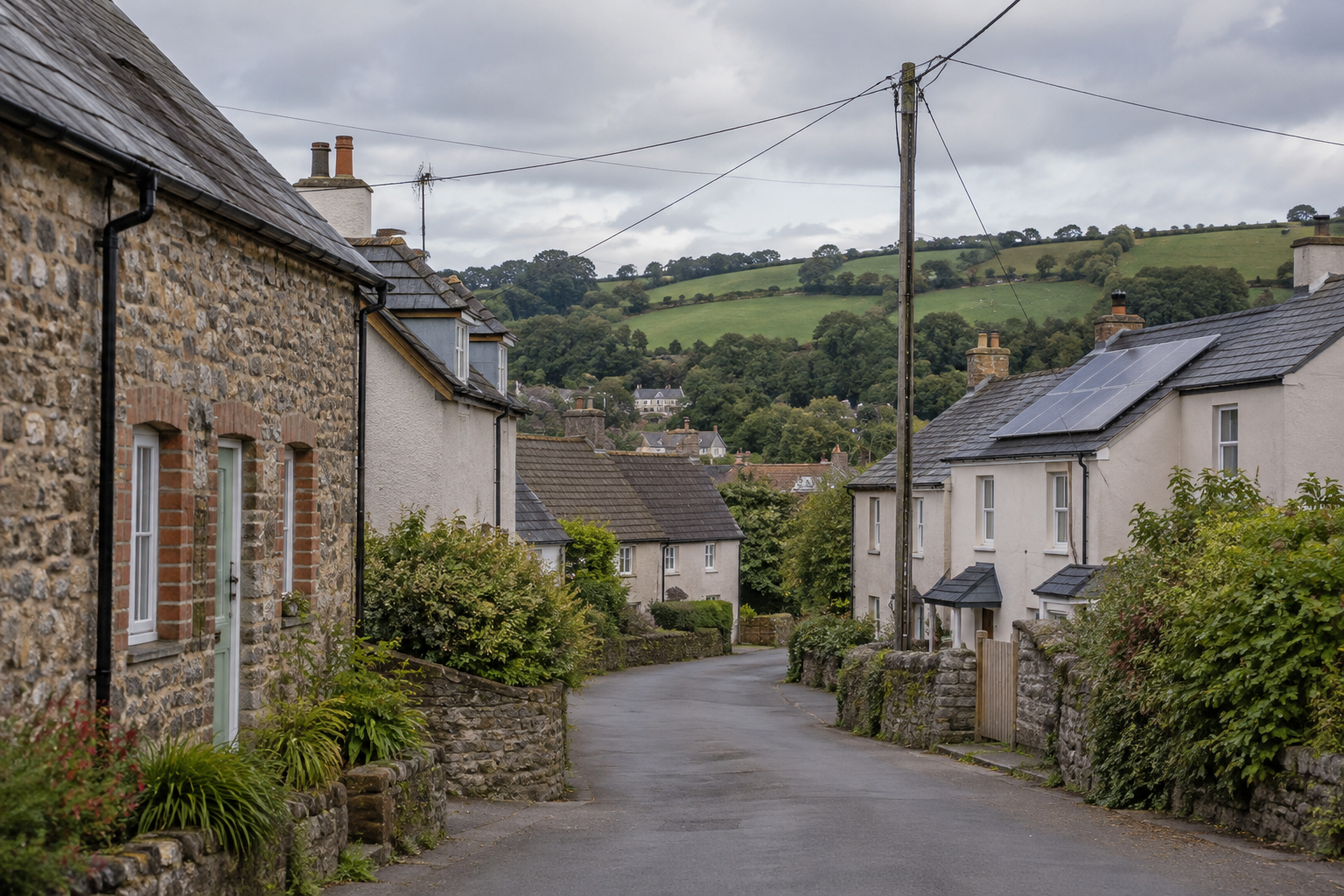
What do the government's energy plans mean for Devon?
The plans could help Devon through better grid connections, home upgrades and a stronger role for communities. But the speech promises no specific saving on a Devon household’s bill or date for local delivery.
The Department for Energy Security and Net Zero’s Building an energy system that delivers for all is dated 14 October 2026 and attributed to Miatta Fahnbulleh at Energy UK’s annual conference. It’s a national policy speech, not a delivery programme for Exeter, Plymouth or the villages between them.
Its priorities fall into three broad groups — worth separating before anyone starts pencilling savings into the household budget.
Affordable energy and better homes. Fahnbulleh argues that success should be measured in bills and whether people can live comfortably, rather than simply how much electricity gets generated. The speech links that ambition to homegrown clean power and the Warm Homes Plan, including insulation, solar, clean heating and smart technology.
For households in Exeter and Plymouth, that raises practical questions about which homes could get support and what improvements would suit them. For rural Devon homes off the gas network, the suitability of heating upgrades matters just as much. A cob or granite cottage needs an approach that respects its construction; a national ambition doesn’t tell its owner which work will be funded.
Infrastructure that joins up. According to the DESNZ speech, Great British Grid would bring additional public investment and dedicated leadership, working alongside network operators and private investors. The stated aim is to coordinate network planning, connections and investment rather than treat them as separate problems.
That matters to Devon through the South West grid: new generation and growing electricity demand need networks that can accommodate them. However, the text names no Devon connection project, upgrade location or completion date.
A stronger community role. Fahnbulleh says communities hosting energy infrastructure should share in its rewards. The speech describes Great British Energy supporting local energy projects and greater community ownership, alongside devolved Warm Homes Plan funding.
For coastal communities around Torbay, or villages near Dartmoor and Exmoor, the relevant question is what that participation would look like locally. The text doesn’t identify a Devon scheme or explain how residents here would apply.
What we know — and what we don’t
- We know: the speech sets out national intentions on affordability, coordinated infrastructure, home upgrades and community involvement.
- We don’t know from this text: Devon’s funding allocation, household eligibility, local delivery dates or individual bill savings.
We’ve used only that extract, without assuming a closing announcement or treating it as the complete speech.
Will these reforms make my energy bills cheaper in Devon?
Lower bills are the aim, but there’s no confirmed saving for your Devon household. The Department for Energy Security and Net Zero (DESNZ) speech gives neither a local household figure nor a timetable for when reforms might reduce what you pay.
The speech’s argument is straightforward: Britain’s exposure to global fossil fuel markets leaves households vulnerable when international prices jump. Events far away can make themselves felt in an Exmouth kitchen just as readily as anywhere else.
DESNZ presents more homegrown clean power as a way to reduce that exposure. But generating electricity is only part of the job: the network must also be able to carry it to the homes and businesses that need it.
According to the speech, generators are sometimes paid to turn down renewable output because the network cannot use or move the power efficiently. That’s the link between reform and affordability being argued here — not a promise that a new wind or solar project will immediately knock money off your next direct debit.
Big national figures aren’t household savings
DESNZ points to three measures of national progress:
- £100 billion of private investment in clean power “unlocked”.
- Enough clean power consented to power over 20 million homes.
- Almost two-thirds of Britain’s electricity generation coming from clean power in 2025.
Those are the speech’s claims, rather than Devon-specific results. “Consented” means permission has been granted; it doesn’t mean every project is built, connected and supplying electricity. And electricity generation isn’t the same as all energy use: heating and transport also use other fuels.
There’s another distinction worth keeping clear. The speech refers to a VAT cut on energy bills, £150 off bill costs in the previous Budget, and expansion of the £150 Warm Home Discount to over six million families.
It doesn’t provide enough detail to establish current eligibility or what any particular account is entitled to. These references shouldn’t be added together into a universal household saving, and the VAT reference gives no rate or account-level calculation.
For a Plymouth flat, the practical effect would depend on its heating arrangements, energy use and tariff. A national clean-power figure doesn’t tell its occupant what their bill will be.
For an Exmouth household, the speech likewise offers no basis for predicting a lower direct debit or assuming entitlement to the support mentioned.
For an off-gas Dartmoor home, the distinction between electricity and other fuels matters especially. If a granite cottage uses heating oil, a change in electricity costs wouldn’t directly reduce its oil bill. How much electricity it uses for heating and everyday needs would shape how much any future electricity-price reduction mattered.
What is Great British Grid, and could it help Devon connections?
Great British Grid is the government’s plan to bring additional public investment and dedicated leadership to grid upgrades, working alongside existing network operators and private investors. It could help Devon connections, but the Department for Energy Security and Net Zero (DESNZ) speech doesn’t promise a quicker connection for any particular local project.
The idea is to treat network planning, connections and investment as a joined-up national priority. DESNZ says Great British Grid will support upgrades intended to reduce network constraint costs and meet rising electricity demand.
There’s some industry language here, but the underlying point is straightforward:
- Generation means making electricity.
- Networks means moving it through cables, lines and substations.
- Demand means using it, whether that’s in a Plymouth home, an Exeter workshop or a rural business.
The speech argues that these shouldn’t be planned as separate challenges. There’s little practical benefit in having power available if the network can’t get it to where it’s needed.
What might that mean on the South West grid?
DESNZ identifies two national problems. First, viable projects and businesses wanting to expand can struggle to secure timely connections. Second, generators can be paid to reduce their output because the network cannot always use or move the electricity efficiently.
Those payments are part of what the speech means by “constraint costs”. Put simply, renewable electricity may be available, but a network bottleneck can prevent it reaching users. Better coordination and suitable upgrades are meant to help address that.
For a Devon illustration, imagine a business near Newton Abbot wanting to expand with additional electric machinery. It might need a larger electricity connection before that equipment can run. A community renewable proposal near Barnstaple, meanwhile, might need a connection that allows it to export electricity.
These are hypothetical examples, not announced projects or evidence of actual delays in either place. They show the two sides of the connection question: taking more electricity from the South West grid and putting electricity into it.
Nor does a national transmission upgrade automatically fix every local connection issue. The main network carrying electricity over long distances and the local distribution network serving individual premises do different jobs. A particular connection may still depend on local cable or substation capacity and the work identified by its network operator.
The DESNZ speech identifies no Devon route, substation, investment allocation, construction date or guaranteed reduction in waiting times. For anyone with a real proposal, the useful detail will be the network operator’s assessment of that specific connection: what capacity is available, what work is needed and what timetable can actually be offered.
What is Great British Energy meant to do for Devon?
Great British Energy is meant to give the public a direct stake in energy projects, through investment, project development and partnerships. For Devon, that could mean involvement in future clean-energy schemes, but the Department for Energy Security and Net Zero (DESNZ) speech doesn’t identify which local projects would receive support.
The role DESNZ describes goes beyond government setting rules and watching businesses get on with it. Great British Energy would allow the state to invest directly, help develop projects and work with partners over the longer term.
That includes entering parts of the energy market where DESNZ sees a strategic national benefit, even when the immediate commercial attraction isn’t obvious. The stated aim is to retain more of the value of Britain’s natural resources for the public, with a lasting stake in the energy assets being built.
For readers in Exeter, Plymouth or Barnstaple, the important distinction is between helping fund and develop energy projects and selling electricity to your home. Nothing in this speech means Devon households will automatically change supplier or receive a new Great British Energy tariff. It isn’t a household switching announcement.
Public investment, private partners and a local stake
DESNZ’s argument isn’t that everything should be state-owned, or that competition should disappear. It sets out a combination of public direction, private investment and community participation, with different responsibilities sitting where they can be delivered best.
In that picture, Great British Energy works alongside private investors and helps build capability in technologies and supply chains. Communities should also have opportunities to participate and benefit, rather than simply hosting infrastructure.
That matters when considering potential schemes around Devon’s towns and rural communities. A project near Totnes or on the edge of a coastal community would need more than a national ambition: residents would want to understand its local purpose, their opportunities to take part and how any benefits would be shared. The speech doesn’t settle those details.
Great British Grid has a different stated emphasis: network planning, connections and investment in grid upgrades. Put simply, Great British Energy’s role centres on investment, development and a public stake in energy assets; Great British Grid’s focus is the networks needed to connect and move power. DESNZ doesn’t provide enough detail here to map out their precise organisational relationship.
For Devon readers, the questions still needing answers are practical ones: which projects will Great British Energy support locally? Who can participate — and on what terms? And when might households, community groups and businesses see tangible benefits, rather than another national announcement?
Could the Warm Homes Plan help my Devon home?
Potentially, yes: the proposed Warm Homes Plan could help coordinate upgrades to Devon homes. But the Department for Energy Security and Net Zero (DESNZ) speech doesn’t establish whether your property would qualify or what support you could receive.
The proposal is to devolve funding so regional and local government can help organise and speed up home and building improvements. DESNZ describes a community-by-community approach covering insulation, solar, clean heat and smart technology, rather than leaving every household to work everything out alone.
That’s a proposed approach to delivery, not confirmation of a funded upgrade for your street in Exeter or Newton Abbot. The speech doesn’t set out grant amounts, income rules, approved installers or application dates. Nor does it establish eligibility for tenants, landlords or holiday lets.
What might those upgrades involve?
The categories are broad. In everyday terms, they could mean:
- Insulation: reducing heat loss through parts of the building, such as its roof or walls, where suitable.
- Solar: equipment that uses sunlight, including panels that generate electricity. Roof condition, shading and available space matter.
- Clean heat: lower-carbon heating, such as heat pumps. The right choice depends on the property, its heating needs and its existing system.
- Smart technology: controls that help manage heating or electricity use, potentially shifting some use to different times where suitable equipment and tariffs allow.
Those are general explanations, not a list of measures DESNZ has promised to install in every home. A package that makes sense for one property may be quite wrong for the house next door.
Devon’s buildings make that distinction important. Cob and granite cottages need an understanding of their construction, condition and how moisture moves through them. Older buildings should have appropriate assessment of their fabric, moisture and ventilation before insulation or heating changes are decided. Simply adding insulation without considering those issues isn’t a sensible starting point.
Terraces in Plymouth and Torquay need individual assessment too. Roof layouts, space for equipment and existing heating arrangements can differ, even along the same row.
For rural off-gas properties around Tavistock and Exmoor, heating choices need to reflect the building’s heat demand and current setup. Being off the gas network doesn’t automatically make any particular replacement the right answer. Coastal exposure, including salt air, can also matter when assessing outdoor equipment. This is practical building background, not technical specifications from the speech.
Before seeking property-specific advice, gather whatever information you already have about your heating, insulation and electrical equipment, including controls and any previous upgrades. Note damp or ventilation concerns as well. There’s no need to rush into buying equipment on the strength of a speech.
Will Devon communities get a say in local energy projects?
That’s the commitment in the Department for Energy Security and Net Zero (DESNZ) speech: a stronger voice for communities, more opportunities for local ownership and a fairer share of the benefits where energy infrastructure is built. What that means for any particular Devon village or neighbourhood still needs spelling out.
The speech argues that communities shouldn’t simply host the infrastructure powering the country; they should have a stake in it. It promises support for greater participation and opportunities for communities to own more renewable energy projects in their area.
Through Great British Energy, DESNZ sets out an ambition to support over 1,000 community and local energy projects by 2030. That’s a national ambition, not a Devon allocation. The speech doesn’t identify a funded project in Totnes, Barnstaple or rural communities near Dartmoor, nor say how many projects Devon might receive.
For readers in those places, it’s a reason to ask what participation could look like when an actual proposal comes forward — not a sign that funding is already heading their way.
Having a say isn’t the same as owning a share
Three ideas need keeping separate here. Consultation means being asked for views and having an opportunity to raise concerns. It isn’t, by itself, ownership or a right to decide the outcome.
Community ownership means a community holds an ownership stake in a project. The arrangements matter: who represents local people, who makes decisions and whether joining involves putting money in.
Financial benefits are another question. Sharing rewards could take different forms, but the DESNZ speech doesn’t set out a universal mechanism or payment. It doesn’t promise every nearby household a bill discount, a cash payment or an ownership share.
When there’s a real proposal on the table, useful questions include:
- Who owns it? Is there a community stake, and what influence comes with it?
- Who can participate? Can renters and households without money to invest take part?
- How are benefits shared? Who qualifies, who decides and what is actually guaranteed?
- Who maintains the equipment? Who pays for repairs and takes responsibility over its working life?
Those details deserve plain answers before anyone is asked to back a scheme.
The setting matters, too. Around Dartmoor, landscape considerations will be important; in towns and villages, the buildings involved and their surroundings also need attention. A proposal involving an older cob or granite building raises different practical questions from one on a modern roof.
Local planning requirements still need checking for the specific site and equipment. The speech’s support for community energy isn’t a promise of planning approval or an exemption from the usual considerations.
What should Devon households and businesses do now?
Check what you’re paying now, confirm any support you can actually claim, and assess your property before committing to upgrades. The government’s plans aren’t a reason to assume a cheaper tariff, a grant or a faster connection is already available.
For an off-gas cottage near Tavistock, the sensible starting point may be different from a flat in Exeter or a shop in Torquay. Building fabric, existing heating, electrical condition and how the property is used all matter. A cob or granite cottage needs advice suited to its construction, rather than a package chosen simply because funding might become available.
The Department for Energy Security and Net Zero (DESNZ) speech sets out an intention to strengthen consumer protection and make Ofgem more powerful and effective. It doesn’t provide a complete new complaints process. If you have a billing dispute now, use your supplier’s published complaints procedure and check current official guidance rather than waiting for these reforms.
What should Devon watch for next? Published scheme rules, confirmed Devon funding allocations, local delivery arrangements, named network projects and realistic dates. Those details will matter more to an individual household or business than a national announcement. The speech doesn’t establish them for Devon.
A practical checklist
-
Check your bills and tariff terms. Look at your recorded usage, unit rates, standing charges, tariff end date and any exit fees. If something looks wrong, ask your supplier to explain it before making comparisons.
-
Confirm support through current guidance. Check GOV.UK, the relevant council or your supplier, depending on the scheme. Businesses, landlords and holiday-let owners shouldn’t assume household support covers their premises or circumstances.
-
Assess the property before choosing equipment. Consider insulation, ventilation and heating needs alongside electrical work. Check any necessary permissions, particularly where a property is listed, rented or subject to planning restrictions.
-
Keep installation advice and connection decisions separate. A qualified electrician can assess proposed installation work and the condition of your electrics. The network operator determines connection requirements and available capacity. Where a project involves a connection, seek project-specific network advice before committing to costs or dates.
-
Choose a manageable next step. Gather recent bills, ask whether an Electrical Installation Condition Report (EICR) would be appropriate, or compare local electricians’ written quotes for the same clearly defined work. Ask what’s included and what remains subject to approval.
For households from Barnstaple to Exmouth, keep DESNZ’s everyday test in view when weighing those choices: energy you can afford and a home you can live in comfortably—not just bigger national capacity figures.
Source: Building an energy system that delivers for all (GOV.UK (DESNZ)). Our write-up explains what it means for Devon; check the original for full details.
Your questions answered
Will the energy reforms cut my Devon electricity bill?
Possibly over time, but the DESNZ speech does not give a Devon household saving or a date when bills will fall. It argues that homegrown clean power, better networks and home upgrades should improve affordability. That's the intended direction, not a personal bill guarantee. Your own costs will still depend on your tariff, energy use and circumstances.
What is the difference between Great British Energy and Great British Grid?
In the DESNZ speech, Great British Energy is described as a way for the state to invest directly, develop projects and build partnerships. Great British Grid is presented as additional public investment and leadership for network upgrades, working alongside existing operators and private investors. The speech does not name a Devon project or explain every detail of how the two will operate.
Can I apply for a Warm Homes Plan grant in Devon?
The speech alone doesn't tell you whether you can apply or qualify. DESNZ says regional and local government will have a role in coordinating upgrades through devolved funding, covering insulation, solar, clean heat and smart technology. It doesn't provide application dates, household eligibility rules or Devon grant amounts. Check current official scheme information before committing to work or assuming funding is available.
Does the speech promise help for off-gas homes in Devon?
Not through a specific off-gas offer. DESNZ discusses home upgrades and helping people benefit from electrification, but the speech doesn't set out separate terms for households using oil or other off-gas heating. For a rural Devon home, the appropriate approach will depend on the building and existing system. Don't assume the speech guarantees funding or that one heating solution suits every cottage.
How many community energy projects will Devon get?
The speech doesn't say. DESNZ states that Great British Energy will support over 1,000 community and local energy projects by 2030, but that's a national ambition rather than a Devon allocation. It also backs greater community ownership and participation. There are no named Devon schemes, local funding totals or guaranteed household payments in the text.
Does the speech mean every household gets £150 off?
You shouldn't read it that way. DESNZ refers to £150 off energy bill costs through the previous Budget and separately to expanding the £150 Warm Home Discount to over 6 million families. Those are distinct claims, not an invitation to add up a guaranteed payment for everyone. The speech doesn't give enough eligibility or billing detail to establish what an individual Devon household receives.